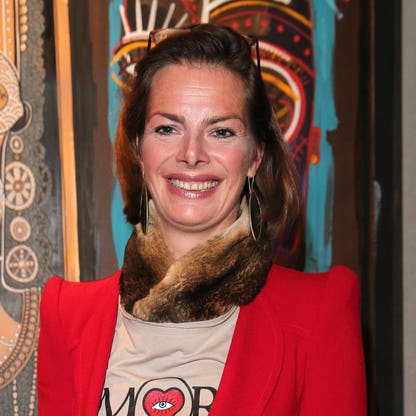
Julia Oetker: Inside the $15 Billion Oetker Empire's Family Split
The name Oetker resonates with generations across Germany and beyond, conjuring images of baking powder, frozen pizzas, and luxury hotels. But behind the façade of a sprawling global conglomerate lies a complex family saga, marked by immense wealth, ambitious heirs, and, ultimately, a significant division. At the heart of this narrative is Julia Oetker, a German businesswoman and one of eight heirs to this colossal fortune, whose personal journey and considerable
Julia Oetker Net Worth: Unpacking the $1.7 Billion Oetker Fortune reflect the intricate dynamics of one of Europe's most prominent family businesses. This article delves into the origins of the Oetker empire, the dramatic family split, and Julia Oetker’s pivotal role within this unfolding legacy.
The Oetker Dynasty: From Baking Powder to a Global Conglomerate
The story of the Oetker empire began modestly in 1891 when August Oetker, Julia's great-grandfather, launched his innovative, non-perishable baking powder in Bielefeld, Germany. What started as a revolutionary kitchen staple soon blossomed into a diverse food products company. However, it was under the astute leadership of Rudolf August Oetker, Julia's father and the third-generation patriarch, that the brand truly achieved global dimensions. Serving as chairman of the company's advisory board until his death in 2007, Rudolf August masterminded an extraordinary diversification strategy that transformed Dr. Oetker into a vast holding company.
Today, or rather prior to its split, the Oetker Group was a diversified conglomerate with subsidiaries employing approximately 26,000 people and generating an astounding $15 billion in annual revenue. Its portfolio extended far beyond food products like puddings and pizzas, encompassing a wide variety of beverages, container shipping, sophisticated financial services, and even a collection of luxurious hotels. Rudolf August Oetker, recognizing the scale of his legacy and having had eight children from three marriages, meticulously ensured that each of his heirs would receive an equal 12.5% share of the Bielefeld-based Dr. Oetker enterprise. This seemingly fair distribution, however, proved to be merely the beginning of a profound family challenge.
Julia Oetker's Stake and the Seeds of Discord
As the youngest of the eight heirs, Julia Oetker inherited a substantial stake in this formidable business empire, contributing significantly to her estimated
Julia Oetker Net Worth: Unpacking the $1.7 Billion Oetker Fortune of $1.7 billion. Her position as an heiress placed her directly within the intense internal debates that would eventually tear the group apart. The equal distribution of shares, while equitable on paper, did not foster the harmonious governance Rudolf August might have hoped for. Instead, the siblings found themselves in a state of continuous unease, clashing over fundamental questions regarding the company's management and its future strategic direction.
The rivalry among the Oetker siblings was so pronounced that even crucial leadership decisions became fraught with tension. A prime example was the question of succession following Richard Oetker's anticipated retirement at the end of 2017. Such internal friction is not uncommon in large family enterprises, especially those that have grown significantly over multiple generations. When numerous strong personalities, each holding a substantial share, try to steer a complex ship, divergent visions can quickly escalate into irreconcilable differences. For the Oetkers, these disputes eventually reached a critical mass, pushing them towards an unprecedented solution.
The $15 Billion Divide: A Family Empire Splits in Two
After years of simmering internal family disputes and disagreements over the group's trajectory, the Oetker empire formally underwent a monumental split in 2021. This decision saw the vast, $8 billion (in sales at the time of the split) conglomerate divided into two entirely separate groups, marking a pivotal moment in the family's history. The rationale behind such a drastic measure was clear: the siblings could no longer agree on a unified path forward, making a division the most practical, albeit painful, solution to preserve their individual interests and the businesses themselves.
One of the newly formed entities was Geschwister Oetker, which translates to "Oetker Siblings." This holding company consolidated brands spanning specific segments of the original portfolio, notably wine and spirits, chemicals, and the collection of luxury hotels. Julia Oetker's brothers, Alfred and Carl Ferdinand Oetker, emerged as co-CEOs and owners of this new venture. The other portion of the original Dr. August Oetker KG, retaining the core food and beverage businesses, continued under a separate ownership and management structure, also controlled by members of the Oetker family. This split effectively partitioned the legacy of Rudolf August Oetker, allowing different branches of the family to pursue distinct visions and strategies without constant internal conflict. It’s a stark reminder that even with immense wealth and a shared heritage, business objectives and personal aspirations can diverge too widely to maintain a singular entity.
Julia Oetker's Evolving Role and Latest Developments
Julia Oetker's journey within the divided Oetker empire continued to evolve even after the 2021 split. In a significant development in September 2024, she made the decision to give up her ownership stake in Geschwister Oetker. This move signals a further step in the decentralization of the family's influence and perhaps Julia's own personal strategic shift away from direct operational involvement in some of the group's segments. While the precise motivations behind her relinquishing her stake are not publicly detailed, such decisions in ultra-wealthy families can stem from various factors: a desire for greater personal autonomy, a focus on other philanthropic or entrepreneurial ventures, or perhaps a strategic divestment in alignment with broader family agreements.
Her departure from Geschwister Oetker ownership highlights the dynamic nature of wealth management and control within dynastic families. It underscores that even powerful heirs may choose different paths, sometimes opting to step back from direct corporate ownership to forge their own legacies. This development, which you can read more about in
Julia Oetker Steps Back: The Heiress's Exit from Oetker Holdings, marks another chapter in the Oetker family's complex narrative, where individual aspirations continue to shape the contours of a once-unified empire.
Insights and Lessons from the Oetker Saga
The Oetker family's journey offers valuable insights for any family contemplating the future of a large enterprise:
* **Succession Planning is Paramount:** While Rudolf August Oetker ensured equal shares, the lack of a clear, universally accepted leadership succession plan for the next generation proved problematic. Comprehensive plans should address both ownership and management.
* **The Challenge of Equal Shares vs. Unified Vision:** Equal distribution of wealth doesn't automatically translate to a shared vision for business direction. Different siblings may have vastly different risk appetites, ethical stances, or strategic priorities.
* **Importance of Governance Structures:** For large families, independent board members, family councils, or clearly defined family constitutions (family charters) can mediate disputes and establish objective decision-making processes.
* **Emotional vs. Business Decisions:** Family businesses are inherently susceptible to emotional dynamics. The Oetker split illustrates how these emotions, when unmanaged, can lead to fundamental structural changes.
* **Flexibility and Adaptation:** Sometimes, a division, though challenging, can be the most practical solution to allow different family factions to thrive independently, rather than being stifled by internal conflict.
For families facing similar complexities, it's crucial to proactively engage in open communication, seek external mediation when necessary, and establish robust governance frameworks long before disputes escalate.
Conclusion
Julia Oetker's story is inextricably linked to the grand narrative of the Oetker empire – a testament to entrepreneurial vision, vast wealth accumulation, and the intricate challenges of dynastic succession. Her significant
Julia Oetker Net Worth: Unpacking the $1.7 Billion Oetker Fortune is a direct reflection of her heritage, but her journey within the family business highlights the complexities that even the most successful enterprises face. From its humble origins as a baking powder producer to a $15 billion global powerhouse, the Oetker Group's history is a compelling illustration of growth, family ambition, and the ultimate decision to divide a powerful legacy. As Julia Oetker continues to navigate her path, both within and outside the directly owned family businesses, her story remains a fascinating glimpse into the lives of Germany's most influential industrialist families.